
In my latest articles on cancer and diabetes I touched upon the benefits of fibre. In these articles I mentioned that fibre could help control blood sugar levels in diabetics and also help prevent certain types of cancer. However, I haven't really done any articles which elaborate and go into greater detail concerning fibre so I thought now would be a great opportunity to do so. My next few articles will be concentrating on fibre and I will begin with this article; 'What is Fibre?' I hear fibre mentioned a lot and see it on most food's nutritional value labels. However, all I really knew … [Read more...]
Can Improving Your Fitness Help Prevent Cancer?

In my last few articles I have discussed the main types of cancer in some depth. Whilst some of the articles did go a little outside this blog's topic area there was a reason for this. I had heard from a number of people that a lot of modern health ailments including diabetes and cancer were largely due to an increasingly sedentary lifestyle and an increasingly poor diet, particularly in the developed Western world. After identifying strong links between diabetes and fitness I wanted to determine whether this was also true for cancer. So what are my conclusion on the topic? Read on to … [Read more...]
The Free Fitness Tips Newsletter – August 2008

Hello Everyone. The Free Fitness Tips Newsletter - August 2008 is now online. You can view the HTML version by Clicking Here. You can view the PDF version by Clicking Here. If you have any feedback regarding this month's newsletter please leave a comment at the end of this post. Happy reading :-) … [Read more...]
Skin Cancer Explained

Skin cancer is a type of cancer that develops from malignant growths on the skin. Unlike other forms of cancer, skin cancer can usually spotted in the early stages because clearly visible tumours develop on the skin. Despite this it is still one of the most common cancers with the NHS claiming that it affects 60,000 people each year. Although there are different types of skin cancer (which I will be discussing below), the associated risk factors are very similar for all types. They include: 1) ULTRAVIOLET (UV) LIGHT:- Excessive exposure to ultraviolet light is believed to be the leading … [Read more...]
Ovarian Cancer Explained

Ovarian cancer develops when uncontrolled cell growth in the ovaries leads to the development of a malignant (cancerous) tumour. According to the NHS it affects 7,000 women in the UK each year and is the fourth most common cancer amongst women (following breast cancer, colon cancer and lung cancer). It can affect women of any age but it largely affects menopausal women (who are over 50 years old) and is very rare in women under 40. To discuss ovarian cancer I will begin by further explaining the ovaries. There are two ovaries (left and right) which are part of the female reproductive … [Read more...]
Prostate Cancer Explained

Prostate cancer develops when cells of the prostate (a small gland located below the bladder which is responsible for producing fluid that protects the sperm) mutate and start to multiply out of control. According to Cancer Research UK it is the most common type of cancer in men (with the exception of non melanoma skin cancer) and approximately 24% of cancers diagnosed in men are prostate cancers. In total around 35,000 men are diagnosed with this disease in the UK each year. It generally affects men over 50 and is uncommon in younger males. Like with many cancers, it is unclear exactly what … [Read more...]
Lung Cancer Explained

Lung cancer occurs when uncontrolled cell growth in the lung tissue leads to the development of a malignant tumour. According to the NHS lung cancer is the second most common type of cancer in the UK and the most common worldwide with approximately 38,000 people in the UK diagnosed with the disease each year. There are a number of different types of lung cancer although they all fall under two main bands; Primary Lung Cancer and Mesothelioma. In this article I will be focussing on primary lung cancer. You can read more about mesothelioma by clicking here. Primary lung cancer can be … [Read more...]
Small Cell Lung Cancer Explained

Small cell lung cancer (SCLC) occurs when uncontrolled growth occurs in the small cells of the lung leading to the development of malignant (cancerous) tumours. It is also known as small cell lung carcinoma and oat cell carcinoma (due to the appearance of the cells). According to Cancer Research UK it accounts for approximately 20% of all lung cancers. In this article I will be discussing this condition in greater detail. There are three types of SCLC: 1) SMALL CELL CARCINOMA:- This is the main type of SCLC accounting for approximately 95% of all SCLC cases. 2) MIXED SMALL CELL/LARGE … [Read more...]
Mesothelioma Explained
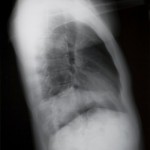
Mesothelioma is a form of cancer that occurs when malignant (cancerous) cells start to develop in the mesothelium (a thin membrane that lines the chest and abdomen). It is almost always caused by previous exposure to asbestos (hence the alternate name “asbestos lung cancer”) and can take up to sixty years to develop fully. According to Cancer Backup UK it affects approximately 2000 people in the UK each year. In this article I will be discussing mesothelioma in greater detail. The mesothelium is divided into two parts: 1) THE PLEURA:- The lining of the lungs. Mesothelioma which affects the … [Read more...]
Breast Cancer Explained

Breast cancer is a cancer that starts in the breast cells of both men and women. According to Cancer Research UK over 44,500 people develop breast cancer each year and of those approximately 300 are men. 1 in 9 women will develop breast cancer in their lifetime and it has become the most common type of cancer in the UK (with the exception of non melanoma skin cancer). To understand the development of breast cancer you first need to understand the breast. The breast is a gland comprised of: - Connective tissue (flesh). - Fat. - Gland tissue divided into lobes/lobules. The lobes produce … [Read more...]